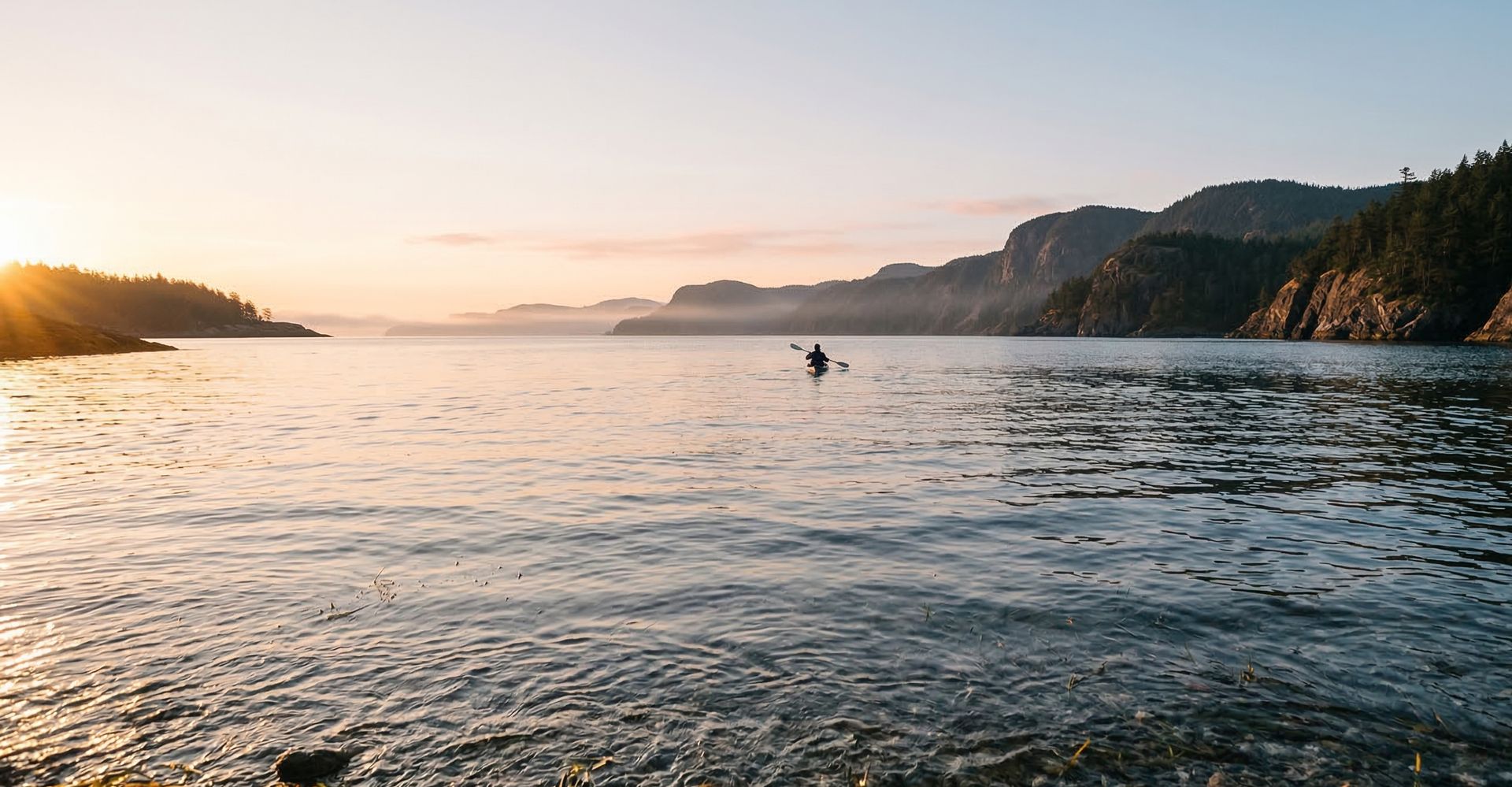
Kayaking is not inherently dangerous. It carries real risks, mainly cold water, wind, and boat traffic, but the sport has a strong safety record when paddlers wear a life jacket and choose water that matches their skill level. Most serious incidents involve a small set of preventable mistakes, not the activity itself.
The danger in kayaking comes almost entirely from decisions you control: skipping the life jacket, misjudging wind or current, or paddling water that's beyond your experience. We'll cover what actually makes kayaking risky, how that risk compares to other outdoor activities, the accidents that happen most often, and the specific steps that make a real difference.
What Actually Makes Kayaking Risky?
The biggest risk factors in kayaking are cold water, wind and waves, boat traffic, and paddling beyond your skill level. Each one is manageable on its own, but they become dangerous when combined or ignored.
Cold water is the most underestimated hazard. Water below 60°F can trigger cold shock, an involuntary gasp reflex that can cause you to inhale water within seconds of an unexpected swim. Air temperature doesn't matter here. A warm, sunny day can sit right on top of water that's still cold from spring runoff or winter melt.
Wind turns calm-looking water into a problem fast. Waves that build from wind hitting your kayak broadside are one of the most common causes of capsizing, and wind can push you away from shore faster than you can paddle back against it. Check an hourly forecast, since wind often builds through the afternoon even when mornings are still.
Boat traffic is a real hazard anywhere kayaks share water with motorized vessels. Kayaks sit low and are easy for boat operators to miss, especially near marinas, channels, and harbor entrances. Bays like Don Armeni, near Seattle, WA mix paddlers with boat traffic, which is exactly the kind of spot where staying alert to your surroundings matters more than paddling technique.
Paddling beyond your skill level ties the other three together. Open ocean, big lakes with long fetch, and whitewater rivers all demand skills that recreational paddlers on a calm afternoon simply haven't built yet.
How Dangerous Is Kayaking Compared to Other Outdoor Activities?
Kayaking is safer than activities like downhill skiing or mountain biking on a per-participant basis, and most kayaking incidents are survivable with basic precautions. The sport's risk profile looks more like hiking than like whitewater rafting or scuba diving.
The comparison that matters most is to boating in general. U.S. Coast Guard data consistently shows that the overwhelming majority of paddling fatalities involve a victim who wasn't wearing a life jacket, not a failure of the boat or the sport itself. That single factor, more than any other, separates a bad swim from a tragedy.
Recreational kayaking on flat, protected water carries meaningfully less risk than sea kayaking, whitewater kayaking, or cold-water paddling in early spring. Lumping all kayaking together overstates the danger for the average paddler on a calm lake and understates it for someone tackling open coastline in November.
Calm inland water keeps the odds firmly in your favor. A protected lake like Woodlawn Lake Park, near San Antonio, TX or Mission Bay - Dana Landing, near San Diego, CA offers a very different risk level than open ocean or a flooding river, even though both are technically "kayaking."
What Are the Most Common Kayaking Accidents?
The most common kayaking incidents are capsizing in wind or waves, collisions with boats or submerged obstacles, and paddlers getting caught out by weather changes mid-trip. Hypothermia from cold water immersion is the most dangerous consequence when something does go wrong.
Capsizing itself rarely causes serious harm. A kayak floats even when swamped, and a properly worn life jacket keeps your head above water the moment you go in. The danger comes from what happens next: prolonged cold water exposure, distance from shore, or panic that leads to poor decisions. Our guide on what to do if your kayak flips covers the full recovery process step by step.
Collisions are less frequent but more serious when they happen, usually in channels or near boat ramps where visibility is poor and traffic is heaviest. Staying close to shore, crossing channels at right angles, and never assuming a larger boat has seen you all reduce this risk substantially.
Weather changes catch paddlers who didn't check conditions before launching or who ignored a shifting sky mid-trip. A calm morning can turn into a windy afternoon in a few hours, which is why checking an hourly forecast, not just the day's summary, matters more than it seems like it should.
Is Kayaking Dangerous for Beginners?
Kayaking is not especially dangerous for beginners as long as they start on calm, protected water, wear a life jacket, and go with someone experienced or take a lesson. Most beginner incidents happen from overconfidence on water that's more advanced than it looks.
New paddlers tend to underestimate two things: how quickly conditions change and how much effort it takes to paddle back against wind or current. A route that looks easy on the way out can become exhausting on the way back if you haven't accounted for either one.
Starting small removes most of the risk. A flat, sheltered spot like Cleveland Lakefront State Park, Edgewater Park Ramp, near Cleveland, OH lets a beginner build comfort with the boat and the paddle stroke before conditions or distance become a factor. If you're new to the sport entirely, our guide to kayaking for beginners covers gear and technique in more depth, and paddlers without strong swimming skills should also read can you kayak without knowing how to swim before heading out.
How Can You Make Kayaking Safer?
You make kayaking safer by wearing a properly fitted life jacket at all times, checking wind and water temperature before you launch, telling someone your route and return time, and staying within a distance you're confident you can paddle back. These four habits address nearly every major risk factor at once.
The life jacket is non-negotiable, not because capsizing is likely, but because it's the one piece of gear that works even when you're caught off guard. A PFD stowed in a hatch does nothing in the two or three seconds after an unexpected flip.
Checking conditions takes less time than packing the car. Wind above 10 to 15 mph starts building waves that make paddling harder and capsizing more likely. Water below 60°F calls for a wetsuit or drysuit, or a change of plans entirely.
Telling someone your plan is the cheapest safety measure that exists. It costs nothing and turns a bad situation into a manageable one, because someone will notice and act if you're overdue. For a full rundown of gear and pre-launch habits, see our complete kayak safety tips guide.
Safety Considerations
Take a basic paddling course if you're new to the sport or paddling somewhere unfamiliar. A few hours with an instructor covers self-rescue, reading water, and boat traffic rules faster than learning by trial and error.
Match your trip to the weakest paddler in your group, not the strongest. A route that's comfortable for an experienced friend can be genuinely dangerous for a beginner tagging along, especially if wind or current picks up partway through.
Dress for the water temperature, not the air temperature. This single habit prevents more serious outcomes than almost any other piece of gear or planning.
Find a launch point near you with conditions that match your experience, and build up to more open or challenging water gradually rather than all at once.
Frequently Asked Questions
Is kayaking more dangerous than swimming?
Kayaking is generally safer than open water swimming because the kayak itself provides flotation and visibility even if you capsize. A life jacket adds another layer of protection that swimming alone doesn't have.
What percentage of kayaking accidents involve alcohol?
Alcohol is a factor in a significant share of fatal boating incidents, including kayaking, according to Coast Guard boating statistics. Impaired judgment affects your ability to read conditions and react quickly, which matters more in a kayak than in a car.
Can you die from kayaking?
Kayaking fatalities do happen, most often from drowning after capsizing without a life jacket or from hypothermia in cold water. Wearing a properly fitted PFD and dressing for water temperature addresses the two biggest causes.
Is ocean kayaking more dangerous than lake kayaking?
Yes, ocean kayaking carries more risk than lake kayaking due to waves, tides, currents, and greater distances from shore. Beginners should build experience on calm lakes and protected bays before attempting open coastline.
Keep Reading
Do You Need to Swim to Paddleboard?
You don't need to know how to swim to try stand-up paddleboarding, but non-swimmers need the right gear, calm water, and a few key precautions.
Read articleCan You Kayak in the Rain?
Yes, you can kayak in light rain on calm water, but lightning, rising rivers, and poor visibility change the calculus. Here's how to judge conditions.
Read article