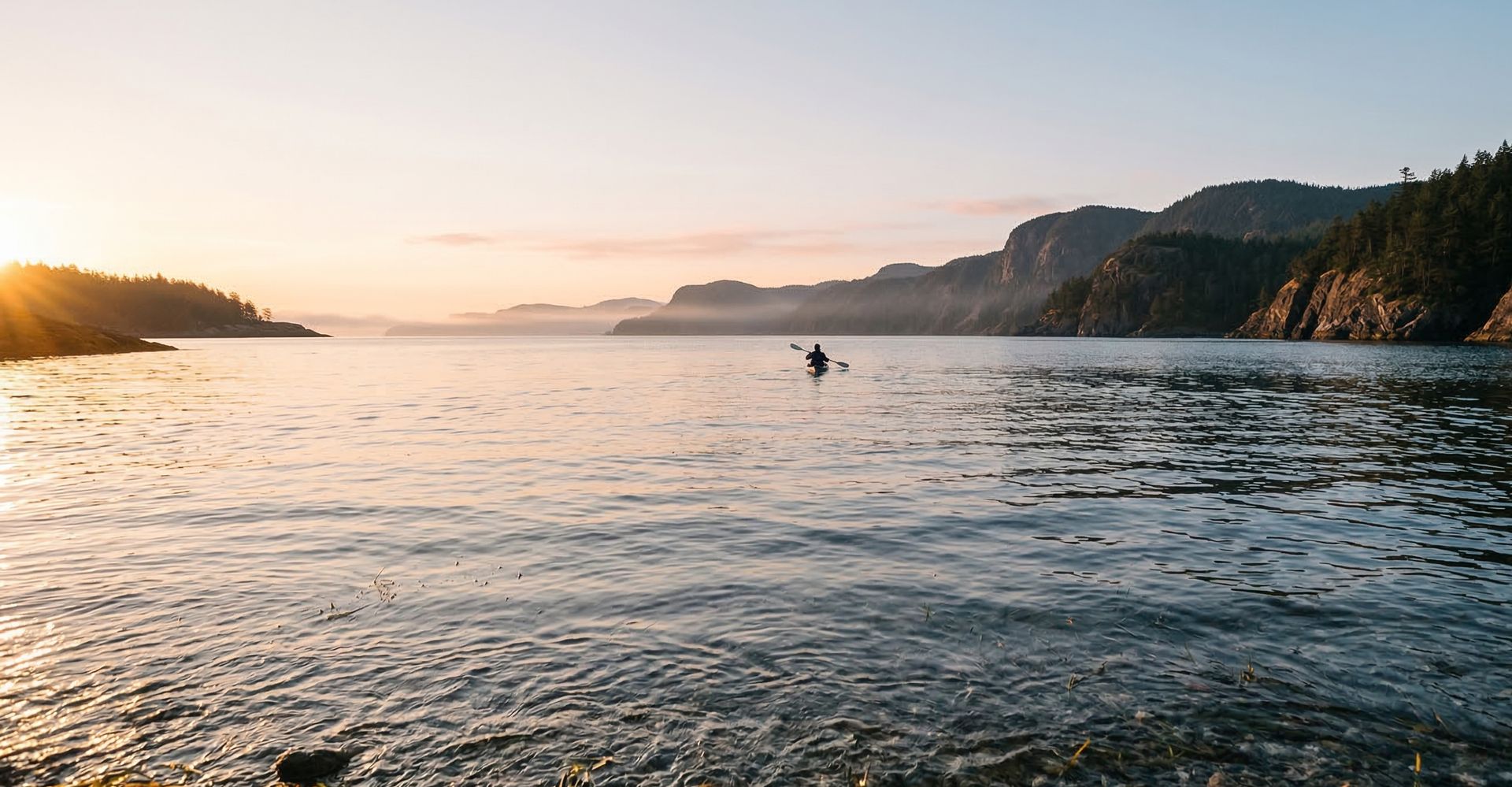
The most important kayak safety tips are simple: wear a properly fitted life jacket, check the weather and water conditions before you launch, tell someone your paddling plan, and stay within your skill level. Most kayaking incidents come from a combination of these basics being skipped, not from freak accidents.
None of this requires expensive gear or years of experience. It requires a short pre-launch routine and a habit of respecting conditions you can't control. We'll cover the gear you need, how to read conditions before you paddle, the on-water rules that keep you and others safe, and what to do if something goes wrong.
What Safety Gear Should Every Kayaker Carry?
Every kayaker should carry a Coast Guard-approved life jacket, a whistle, a bilge pump, and a way to communicate in an emergency, such as a phone in a waterproof case. Add a paddle float if you paddle alone.
Your life jacket is the one item that actually prevents drowning, so fit matters more than style. A Type III PFD designed for paddling lets you rotate your shoulders and reach overhead without restriction. Snug the straps down until you can't pull the jacket over your head, then wear it the entire time you're on the water, not just when it looks rough.
A whistle clipped to your PFD costs almost nothing and works when your voice won't carry over wind or distance. Three sharp blasts is the universal distress signal, recognized by other paddlers, boaters, and shore-based rescuers alike.
A bilge pump clears water that splashes or leaks into your cockpit over the course of a trip. A swamped kayak handles poorly and sits low, which makes it harder to control in wind or wake. A hand pump takes up little space and clears several gallons in a couple of minutes.
Pack a phone in a waterproof pouch or dry bag so you can call for help if you're injured or stranded. Cell coverage isn't guaranteed on remote water, so also tell someone on land your route and expected return time before you launch. Browse our paddling gear guide for specific recommendations on all of this equipment.
How Do You Check Conditions Before You Launch?
Check the wind forecast, water temperature, and any small craft advisories before every trip, not just when the sky looks questionable. Conditions that seem fine from the parking lot can be very different once you're 200 yards from shore.
Wind is the single biggest factor in kayak safety. Anything above 10 to 15 mph starts building waves on open water, and waves hitting your kayak broadside are one of the most common causes of capsizing. Check an hourly forecast, not just the daily summary, since wind often picks up in the afternoon even on calm mornings.
Water temperature matters as much as air temperature, and the two aren't the same. A warm, sunny day can sit on top of water that's still cold from winter runoff or spring melt. If the water is below 60°F, dress for immersion with a wetsuit or drysuit, since cold shock can impair swimming and breathing within seconds of an unexpected swim.
Small craft advisories and marine forecasts, issued by the National Weather Service, tell you when conditions have crossed into risky territory for boats your size. Treat these the same way a boater would: postpone the trip rather than test your limits against them.
Beginner-friendly water makes this whole process easier. Calm lakes like Elmendorf Lake Park, near San Antonio, TX or Lakeside Park, near Tucson, AZ offer protected water and easy shore access, which gives you a wider safety margin while you're still building judgment about conditions.
What Are the Most Important On-Water Safety Rules?
The core on-water rules are: wear your life jacket at all times, stay aware of boat traffic, paddle defensively around larger vessels, and know your limits for distance and duration. Following these consistently prevents the majority of paddling incidents.
Wearing your life jacket the entire time, not just clipping it to the deck, matters because most capsizes happen without warning. A PFD in a hatch does nothing for you in the two or three seconds after you flip.
Boat traffic is a real hazard on shared water, especially near marinas, boat ramps, and channels. Kayaks sit low and are hard for motorboat operators to spot, so stay close to shore where practical, cross channels quickly and at right angles, and never assume a larger boat has seen you. Bays and harbors like Don Armeni, near Seattle, WA or Watson Island Park, near Miami, FL mix paddlers with motorized traffic, so extra awareness pays off in spots like these.
Know your limits before you're testing them mid-trip. A one-mile paddle in calm conditions is a very different effort than the same distance against wind or current. Build up distance gradually, and always paddle a route you're confident you can complete even if conditions shift partway through.
How Should You Kayak Safely Alone?
Solo kayaking is safe if you stick to calm, protected water close to shore, tell someone your plan in advance, and carry the gear to self-rescue without help. The margin for error shrinks when there's no one else to assist you.
Choose water you know or that has a reputation for calm, protected conditions. Small lakes and coves are far more forgiving than open bays or rivers with current. A spot like Cleveland Lakefront State Park, Edgewater Park Ramp, near Cleveland, OH offers exactly that kind of protected, easy-access paddling for a solo trip.
Always tell someone on land where you're going and when you expect to be back. This single habit is what turns a bad situation into a manageable one, since it means someone will notice and act if you don't return on schedule.
Carry self-rescue gear and know how to use it. A paddle float lets you turn your paddle into a stabilizing outrigger so you can climb back into a capsized kayak without assistance. Practice this in shallow water on a calm day before you rely on it for real. Read our guide on what to do if your kayak flips for the full re-entry process.
What Should You Do If Something Goes Wrong on the Water?
If something goes wrong, stay with your kayak, use your whistle to signal for help, and get to the nearest shore or shallow water as soon as it's safe to do so. Panic wastes energy you need for the actual problem.
Your kayak floats even when full of water, and it's far more visible to potential rescuers than you are alone in the water. Hold onto it rather than swimming away to search for help, unless shore is closer than any other option.
Three sharp whistle blasts, repeated at intervals, is the recognized distress signal on the water. Other paddlers, boaters, or people on shore will recognize it even if they can't hear you shout.
Once you're stable, head for the nearest safe landing rather than continuing your planned route. Finishing the trip isn't worth the risk if gear failed, weather turned, or you're rattled from a capsize. Find a launch point near you to plan routes with multiple easy exit points built in.
Safety Considerations
Take a basic paddling safety course if you're new to the sport. A few hours with an instructor covers self-rescue, reading water, and boat traffic rules far faster than trial and error.
Check your gear before every trip, not just when you buy it. PFDs lose buoyancy over years of sun exposure, and paddle floats develop slow leaks. A five-minute check at the put-in catches problems while they're still easy to fix.
Paddle with a buddy when you can, especially in unfamiliar water or building conditions. A second person cuts recovery time dramatically if something goes wrong and gives you someone to make judgment calls with when conditions are borderline.
If you're new to the sport, start with our guide to kayaking for beginners for a broader look at gear, technique, and where to practice.
Frequently Asked Questions
Is kayaking safe for beginners?
Yes, kayaking is safe for beginners when you wear a life jacket, choose calm protected water, and stay close to shore. Most incidents happen when paddlers skip basic precautions or go beyond their skill level, not from the sport itself.
What is the number one kayak safety rule?
Wear your life jacket the entire time you're on the water. Most capsizes happen without warning, and a PFD only works if you're already wearing it when you go in.
Do I need a whistle to kayak?
A whistle isn't required everywhere, but it's one of the cheapest and most effective safety items you can carry. Many states require one as part of your required safety equipment, so check your local regulations before you launch.
How do I know if conditions are too dangerous to kayak?
Conditions are too risky if wind exceeds 15 mph, a small craft advisory is in effect, or water temperature is below 60°F without proper immersion gear. When in doubt, postpone the trip rather than test the limit.
Keep Reading
Do You Need to Swim to Paddleboard?
You don't need to know how to swim to try stand-up paddleboarding, but non-swimmers need the right gear, calm water, and a few key precautions.
Read articleCan You Kayak in the Rain?
Yes, you can kayak in light rain on calm water, but lightning, rising rivers, and poor visibility change the calculus. Here's how to judge conditions.
Read article